Affiliate Disclosure: This post may contain affiliate links. As an Amazon Associate, TripleWags may earn from qualifying purchases at no additional cost to you.
Sharing Food with Your Dog? Read This First!
Few things are harder to resist than those puppy-dog eyes staring at you during mealtime. Many dog owners enjoy sharing treats with their furry companions, but not all human foods are safe for dogs.
While some foods provide valuable nutrients and make excellent occasional treats, others can lead to digestive upset, poisoning, or serious medical emergencies.
This guide will help you understand which foods are safe, which should be avoided, and the products every dog owner should keep on hand.
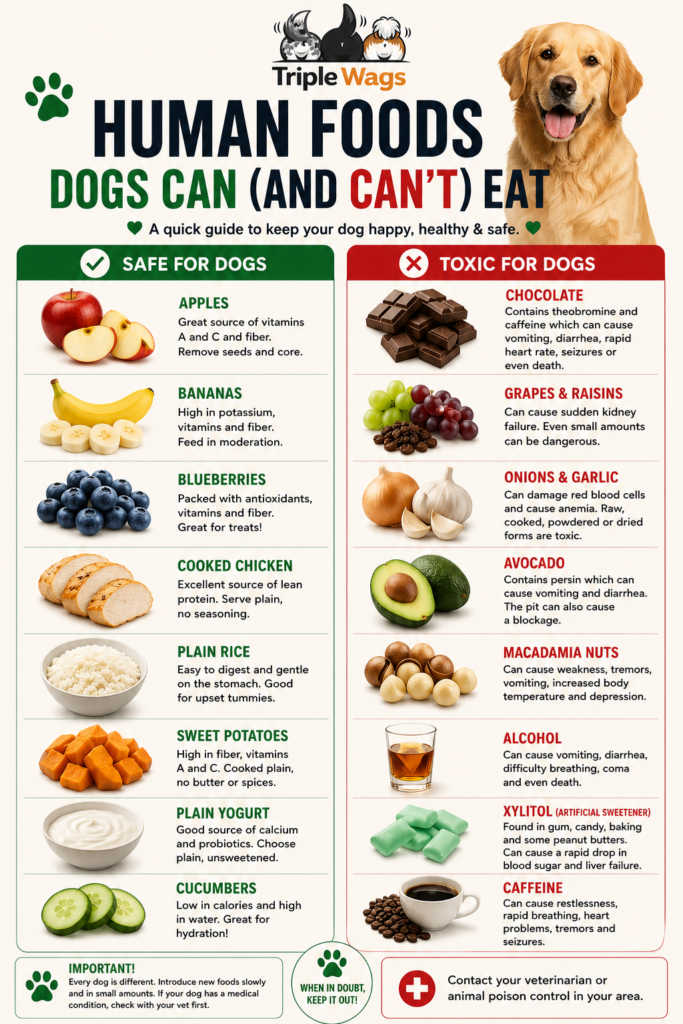
🐶 Safe Human Foods Dogs Can Enjoy
🍎 Apples
Apples are packed with vitamins A and C and are a low-calorie snack.
Benefits: High in fiber, supports digestion, and great crunchy treat
Important: Remove seeds and core before serving.
🍌 Bananas
Bananas are rich in potassium and make a healthy training reward.
Benefits: Natural energy source, contains potassium and magnesium, and easy to digest
Important: Serve in moderation due to natural sugars.
🫐 Blueberries
Often called a “superfood,” blueberries are loaded with antioxidants.
Benefits: Supports immune health, low calorie, and excellent frozen treat
🍗 Plain Cooked Chicken
A favorite among veterinarians for dogs with sensitive stomachs.
Benefits: Lean protein source, supports muscle health, and easy to digest
Important: Avoid seasoning, garlic, onions, or sauces.
🍚 Plain Rice
Plain white rice can be helpful for dogs experiencing digestive upset.
Benefits: Gentle on the stomach, easy digestion, and commonly recommended during recovery
🥔 Sweet Potatoes (Cooked, Plain)
Sweet potatoes are a nutrient-dense, fiber-rich food that many dogs enjoy.
Benefits: Rich in vitamins A, B6, and C, supports digestive health, and helps promote healthy skin and coat
Important: Serve cooked and plain; no butter, sugar, or seasoning.
🥒 Cucumber
Cucumber is a refreshing, hydrating, low-calorie snack for dogs.
Benefits: High water content for hydration, great for weight management, and crunchy and refreshing treat
Important: Slice into small pieces to prevent choking.
🥣 Plain Yogurt (Unsweetened, No Artificial Sweeteners)
Plain yogurt can support digestive health when given in moderation.
Benefits: Contains probiotics for gut health, good source of calcium and protein, and can be used as a treat topper
Important: Avoid flavored yogurts and any products containing xylitol or added sugar.
⚠️ Toxic Foods Every Dog Owner Should Know About
🍫 Chocolate
Chocolate contains theobromine, which dogs cannot metabolize effectively.
Symptoms may include: vomiting, restlessness, increased heart rate, tremors.
🍇 Grapes & Raisins
Even small amounts can cause kidney failure in some dogs.
Symptoms may include: vomiting, lethargy, loss of appetite.
🧅 Onions & Garlic
These foods can damage red blood cells and lead to anemia.
Avoid all forms: raw, cooked, powdered, or dehydrated.
🥑 Avocados
While the flesh is less concerning than other parts, avocados contain persin and the pit poses a choking hazard.
🌰 Macadamia Nuts
Can cause weakness, tremors, vomiting, and difficulty walking.
☕ Caffeine
Coffee, tea, energy drinks, and caffeine-containing products are dangerous for dogs.
🍬 Xylitol
Found in sugar-free gum, candy, some peanut butters, and baked goods.
Note: Can cause severe hypoglycemia and liver failure.
🍷 Alcohol
Alcohol is extremely dangerous for dogs, even in very small amounts.
Effects may include: Vomiting and disorientation, loss of coordination, difficulty breathing, low blood pressure
In severe cases: coma or death
Important: Avoid all exposure to alcoholic beverages, foods cooked with alcohol, or products containing alcohol.
What To Do If Your Dog Eats Something Toxic:
If you suspect your dog has consumed a toxic food:
- Stay calm.
- Remove access to the food.
- Determine approximately how much was consumed.
- Contact your veterinarian immediately.
- Contact your local animal poison control service if advised.
The faster treatment begins, the better the outcome.
The safest approach is to treat human food as an occasional supplement, not a replacement for a complete and balanced canine diet. When in doubt, choose foods specifically formulated for dogs or consult your veterinarian before introducing new foods.
By understanding which foods are safe and which are dangerous, you can help your furry friend live a healthier, happier life.